Run the whole thing
from one place.
Tasks, calendar, notes, habits, and who still owes you money. One app, on a database only you can reach.
Free. No account, nothing to buy. Running in about fifteen minutes.
Built by Priyanshu Volvotkar
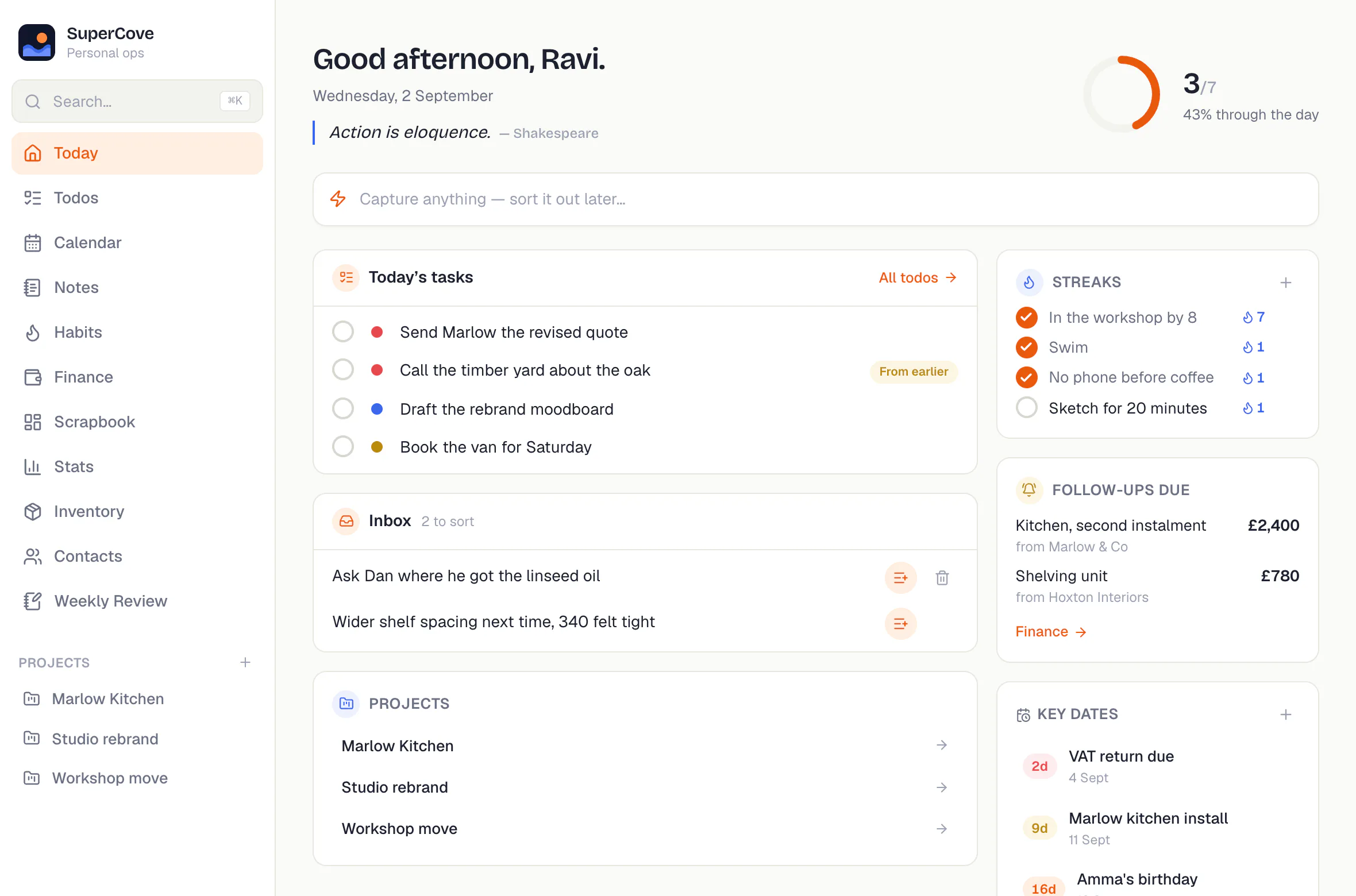
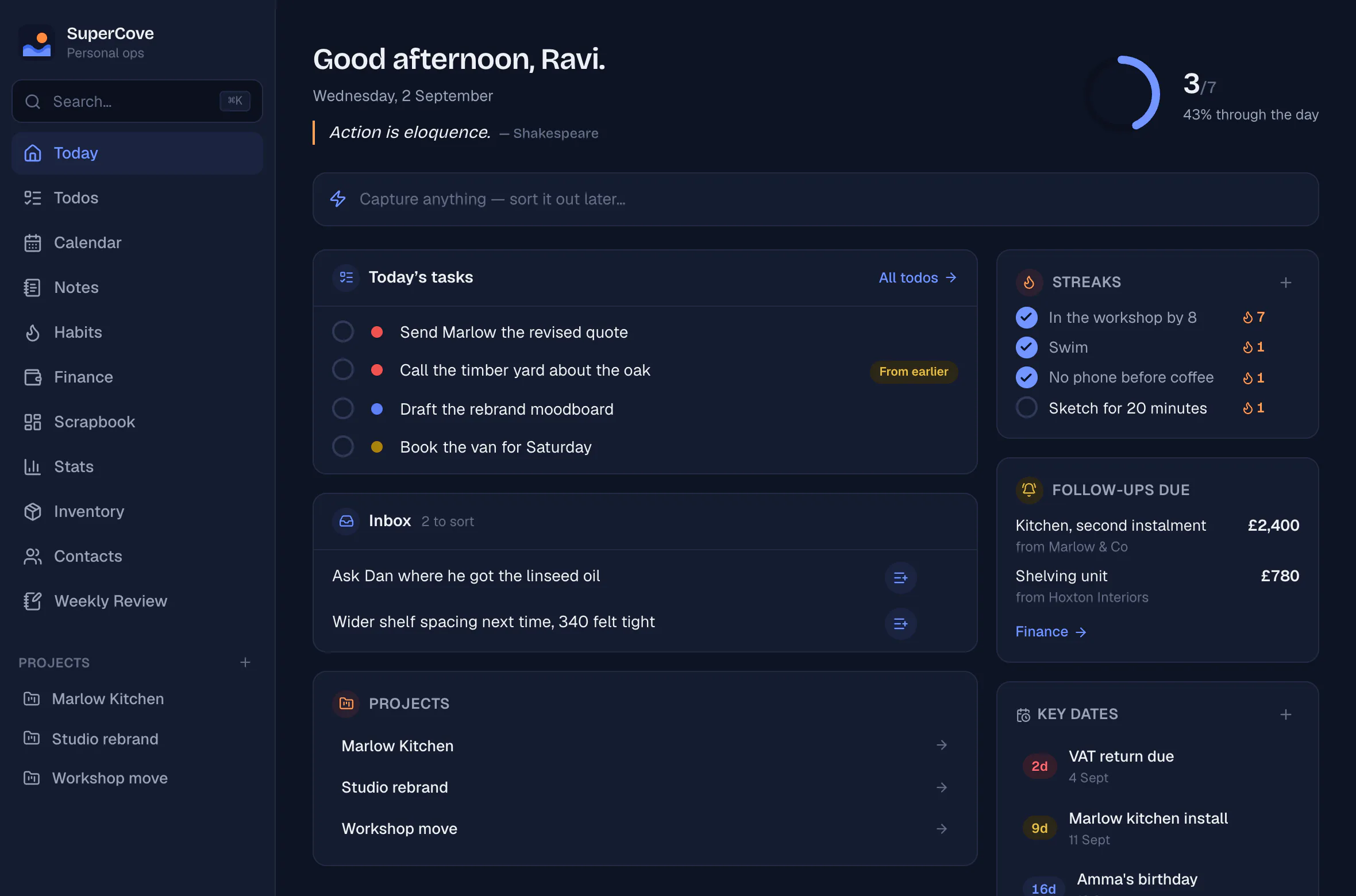
Most people run their life across a spreadsheet, a calendar, a notes app, and a chat thread where they track who still owes them money. This replaced all of it.
It is built for one person. That is why it is fast, and why it never asks who else is on your team. If you want something for a company, this is the wrong tool, and I would rather say so now than after you have set it up.
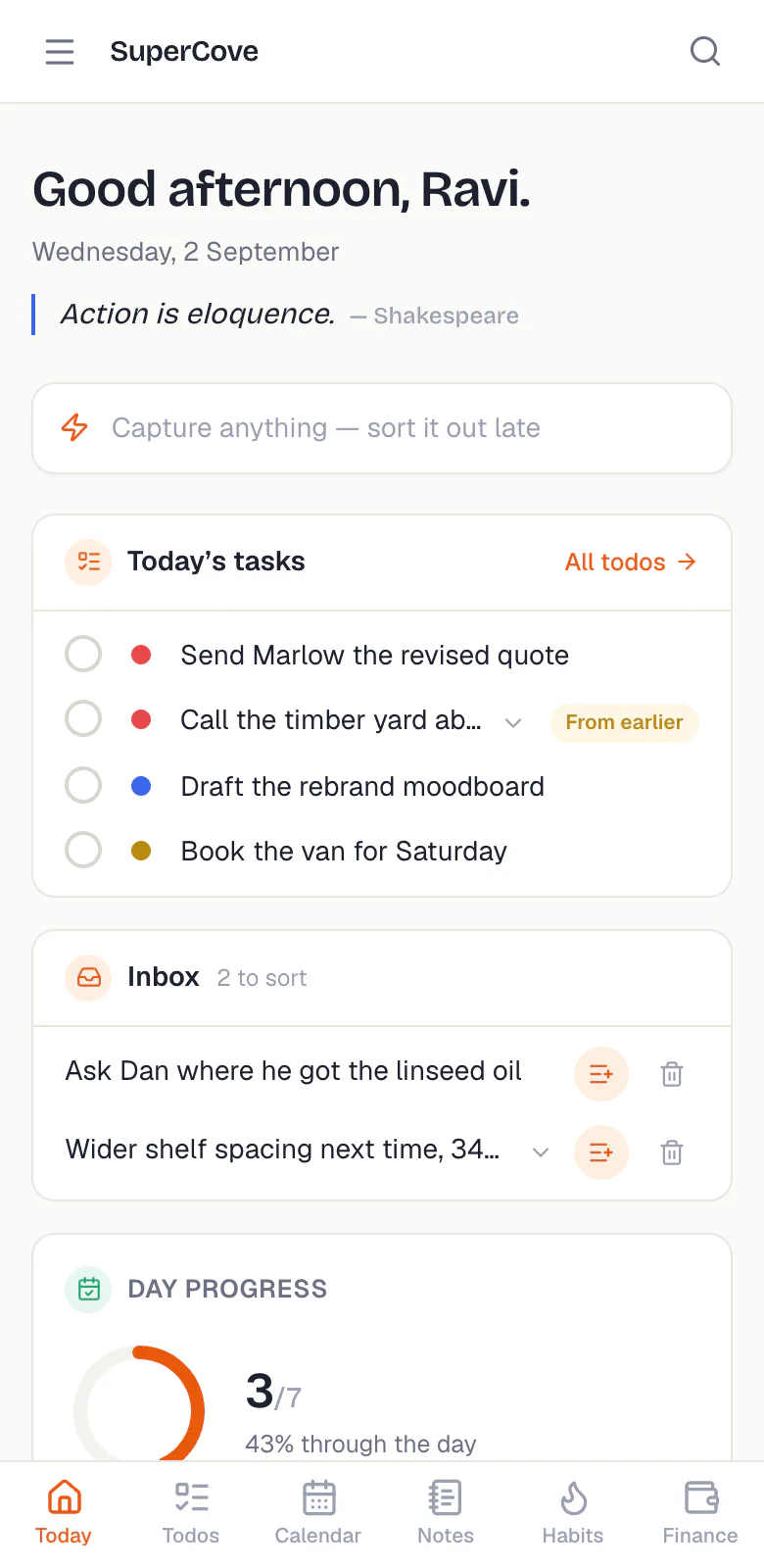
Today, on one screen
What is on, what slipped from yesterday, who owes you money and what is coming up. There is a box at the top for anything you do not want to think about yet.
Shown in dark. The app follows whatever your system is set to.
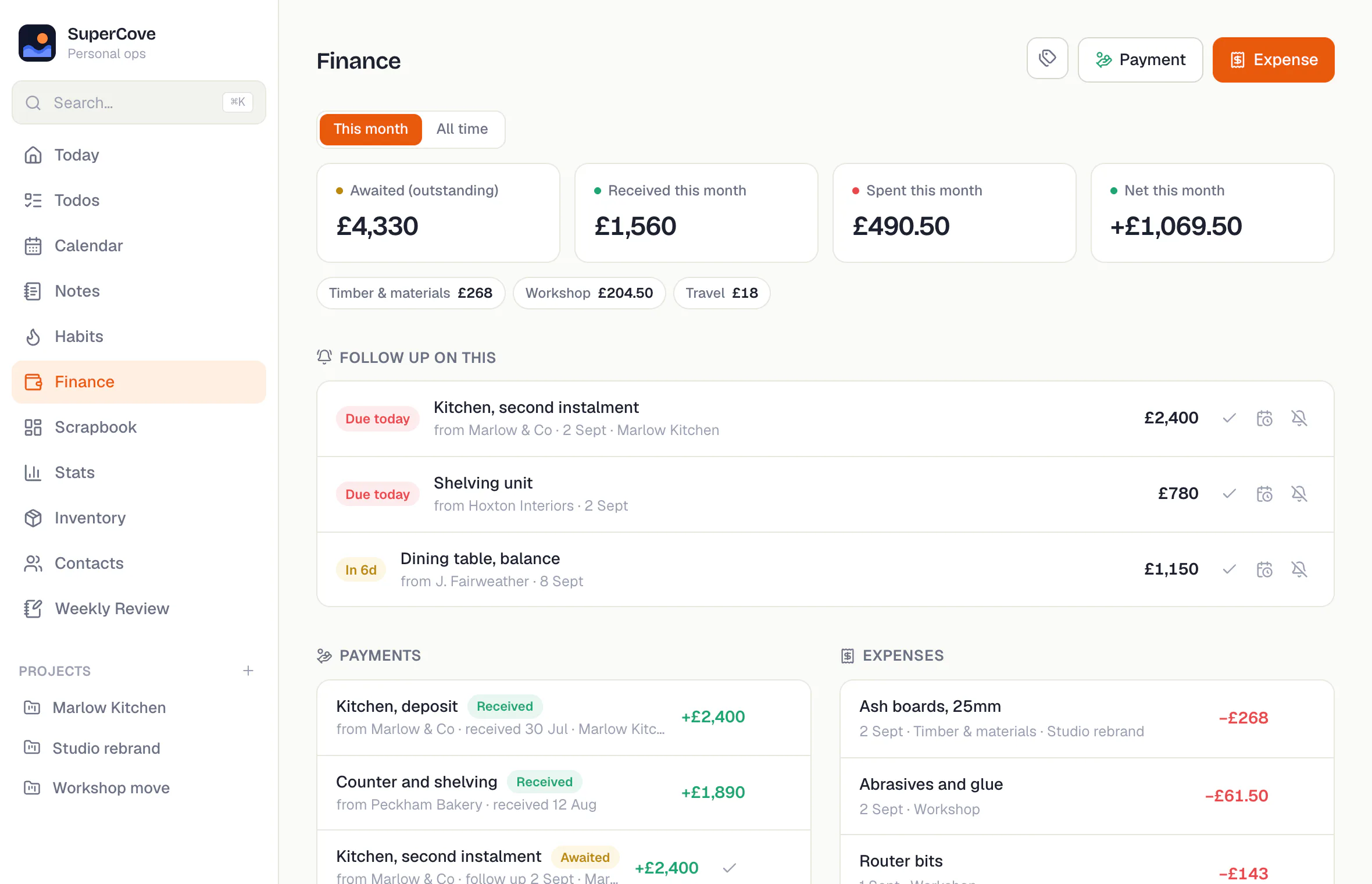
Know who owes you, and when to ask
Money out on one side, money in on the other, each with a follow-up date. On a Monday the only question worth answering is who is late and by how much.
Currency and date format are one line of configuration.
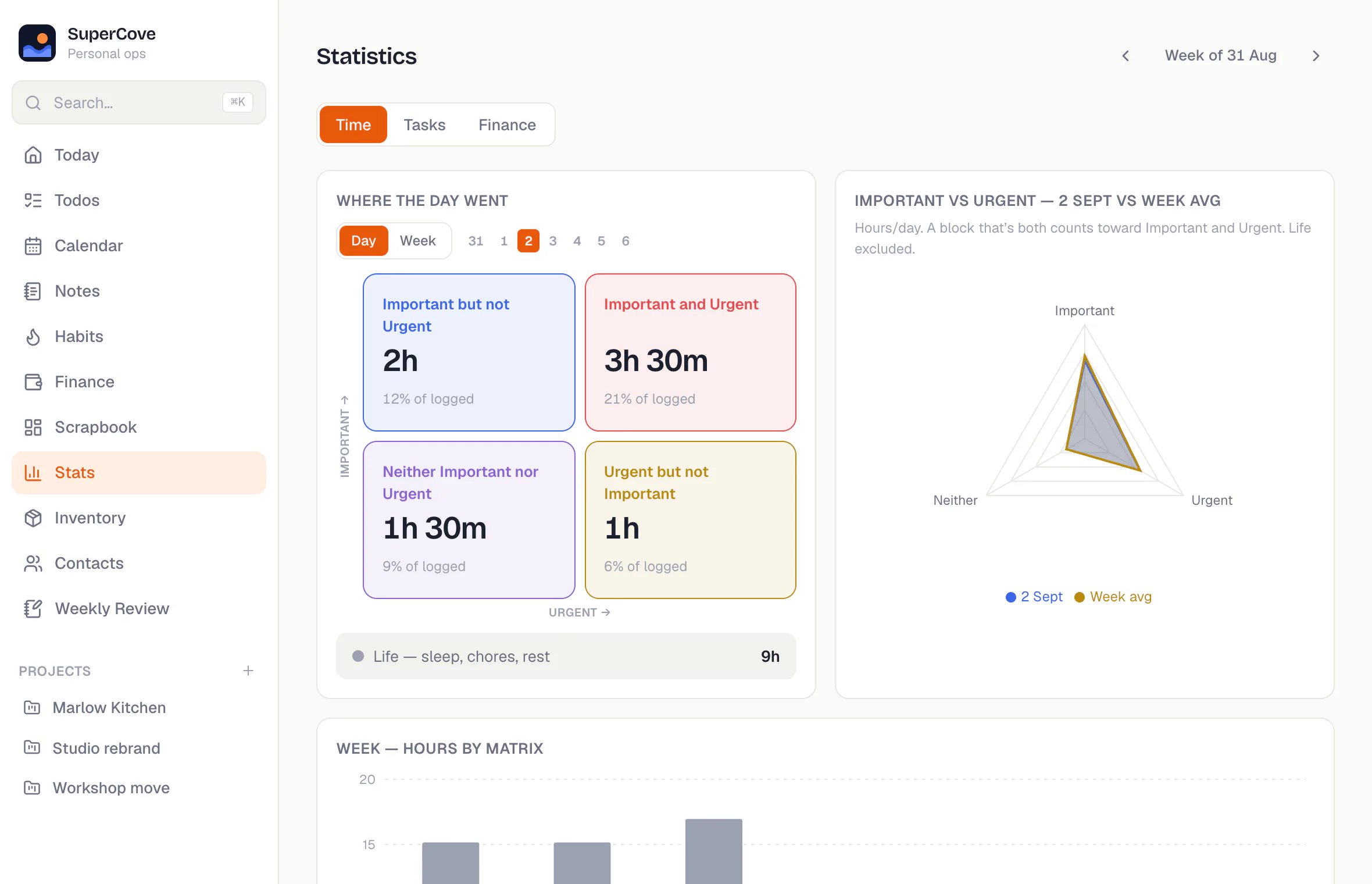
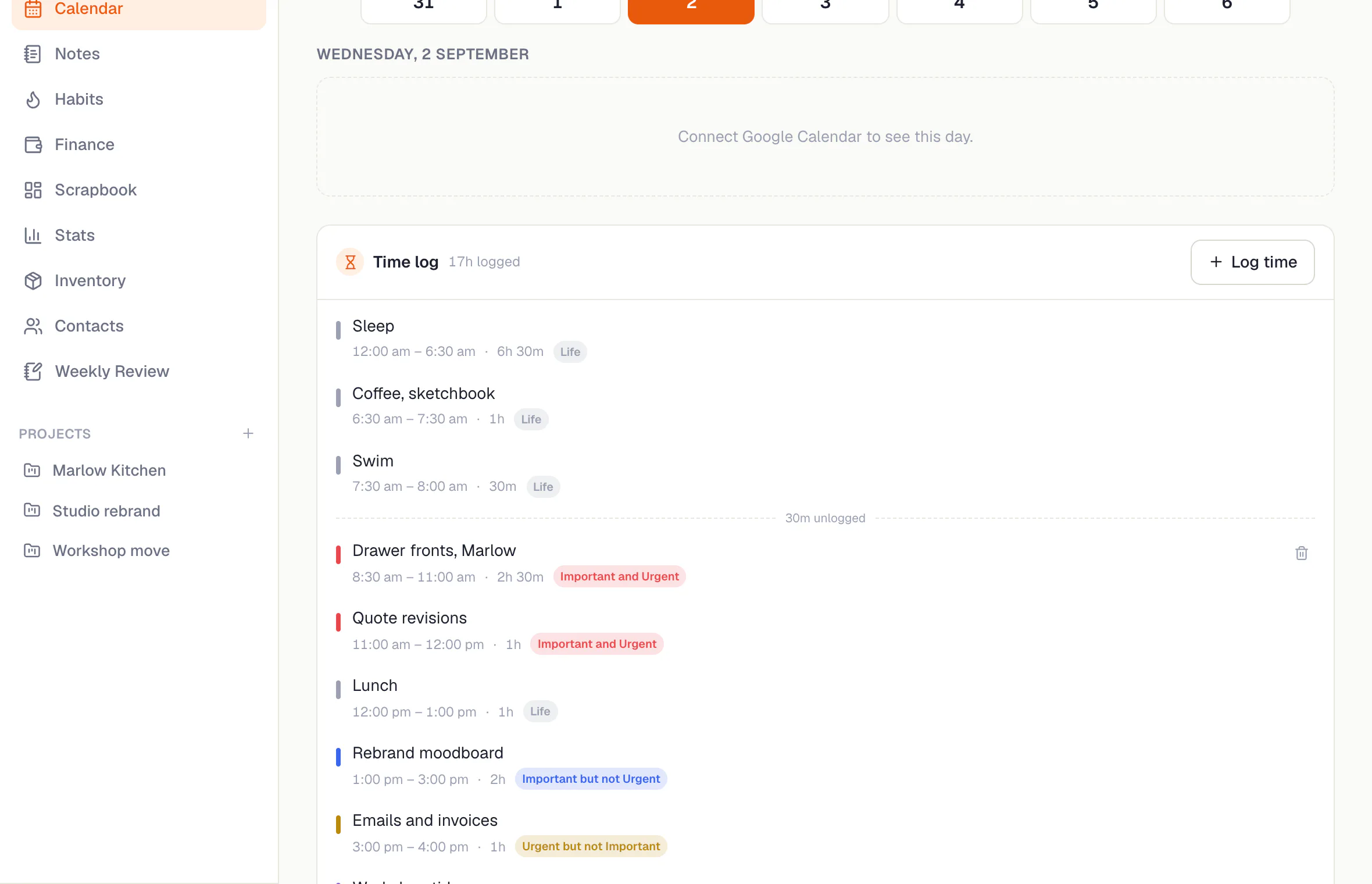
See where the hours actually went
Log time after the fact and tag it important or urgent. The charts handle the uncomfortable part. Sleep and lunch count as life, not failure.
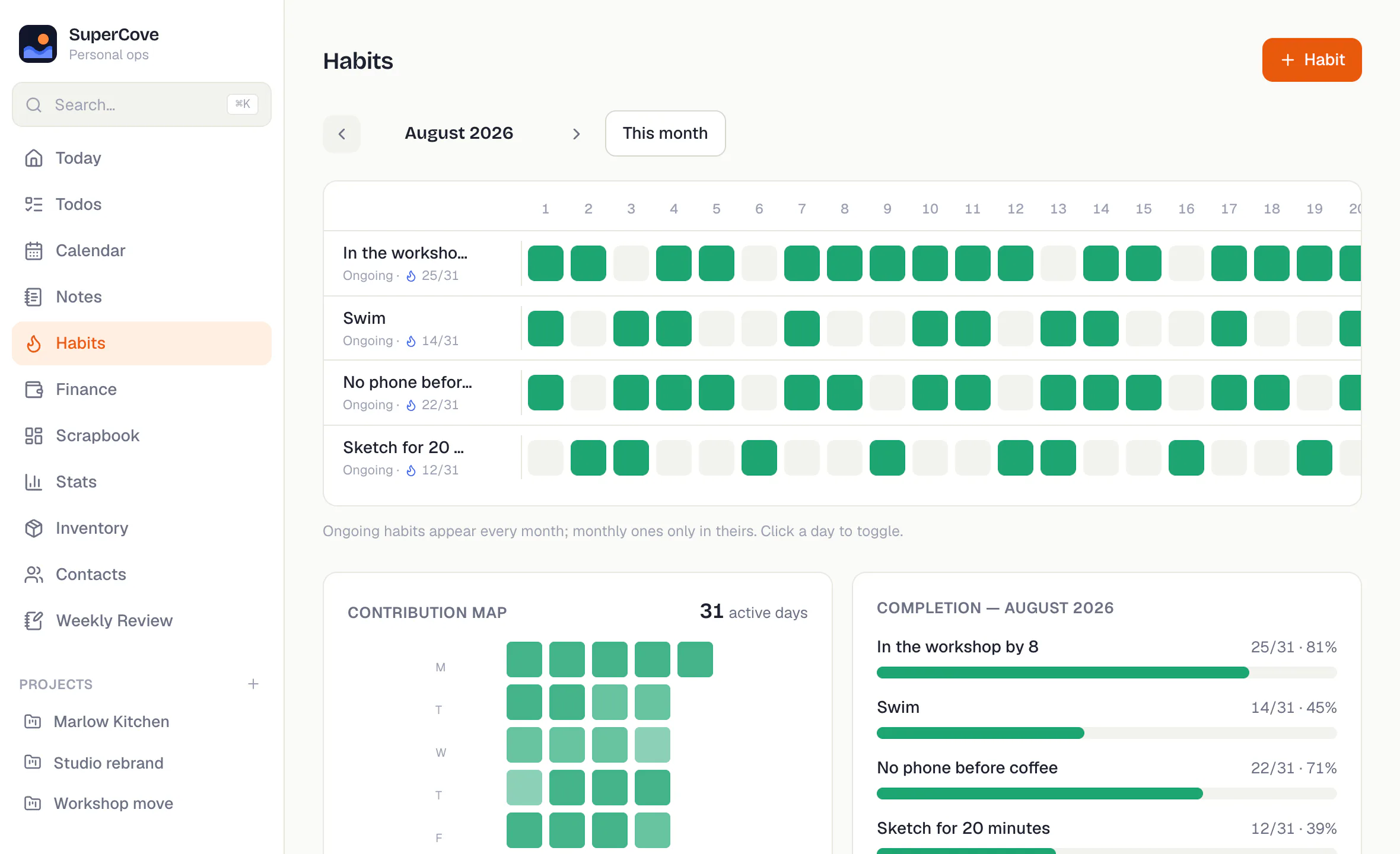
Habits, one month at a time
A bad fortnight does not follow you into the next month. Forty-five percent on the swimming is still forty-five percent.
Notes, projects, and the rest of it
Markdown notes with attachments, a kanban board per project, contacts, a weekly review, stock that posts itself into the ledger, and a scrapbook for whatever is not a list.
Do not want half of that? Switch a module off in Settings and its code stops loading altogether.
It works on your phone, with no signal
Install it from the browser and it behaves like a real app. Anything already loaded stays readable offline, and whatever you write while you are out syncs the moment you are back.
Which matters, because half the time you are adding something while standing somewhere with one bar.
There is no account, because there is no us
It runs on a Supabase project you create. That is where everything lives. Nobody sits between you and your data, and that includes me.
Three steps and a database
You need Node and a free Supabase account. That is the whole list.
1Get the code
Clone it and install. Nothing unusual in here.
git clone https://github.com/volvotkar/SuperCove-OSS.git
cd SuperCove-OSS && npm install
2Point it at your database
Create a Supabase project, push the schema, then put your project URL and key into .env.local.
npx supabase link --project-ref YOUR_REF
npx supabase db push
3Let yourself in
This is the step people miss. Nothing can sign up until your own address is on the allowlist. Run this once, then npm run dev.
-- in the Supabase SQL editor
insert into public.allowed_emails
values ('[email protected]');
To put it online, host it on Vercel, Netlify or Cloudflare Pages and point a subdomain at it. No domain? Build it and drop the folder onto Netlify Drop for a free URL in about a minute. Both routes are in the deploy guide.
Then make it yours
Your life is not shaped like mine, so the copy you run should not be either. Change the colours, rewrite the quotes on the dashboard, add a module you need, delete one you do not.
The repo ships an AGENTS.md, so Claude Code, Cursor and the
rest already know the conventions and the traps before you start.
Properly open source
AGPL-3.0. Run it, change it, fork it, rename it, take it somewhere else. The one condition is that if you run a modified version as a service for other people, you publish your changes too.
That is deliberate. This exists so people can own the software that runs their life, and improvements should come back to everyone who does.